
Automatic Bar Screens for Wastewater
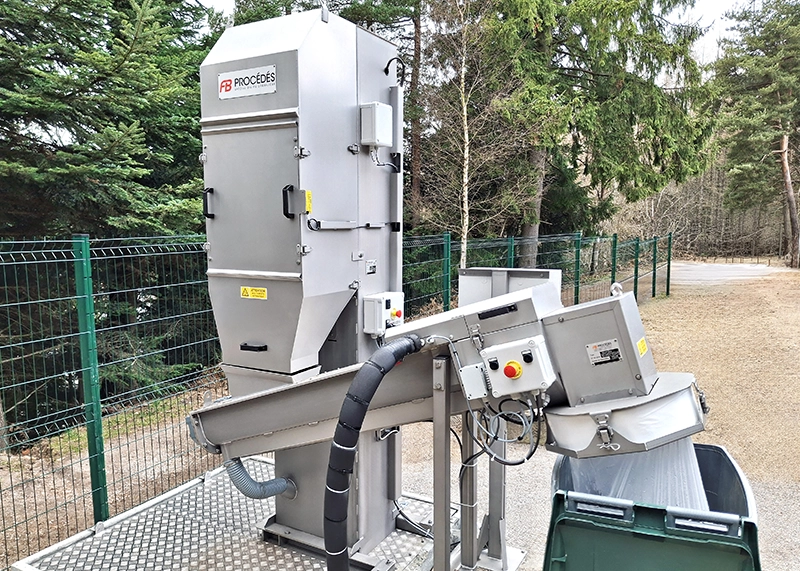
What Is a Bar Screen?
A Bar Screen is a piece of preliminary treatment equipment that captures and removes solids carried by the water. It consists of a bar rack placed across the flow and a cleaning system that lifts the captured debris out of the water.
The gap between the bars is known as the bar spacing. Screening is described as coarse above 20 to 30 mm, medium between 10 and 20 mm, and fine below 10 mm.
Screening: The First Stage of Preliminary Treatment
Preliminary treatment removes from wastewater anything that would interfere with biological treatment: solid waste, grit and grease. Screening always comes first. If it is done poorly, pumps become blocked, rags wrap around mixers and aeration grids, and the entire plant suffers as a result.
Manual or Automatic Bar Screen?
A manually raked screen or a lifting basket requires an operator to come and remove the debris by hand. This solution quickly reaches its limits as the flow rate or debris load increases, and the task exposes the operator to risks.
An automatic Bar Screen cleans the screen by itself, either at regular intervals or as soon as the upstream water level rises. The debris is discharged directly into a bin, a screw conveyor or a screw compactor, with no need for anyone to enter the structure.
How Does an Automatic Bar Screen Work?
Screening: The First Stage of Preliminary Treatment
A screening cycle takes place in four stages:
- Detection: the cycle is triggered by a timer, or when a sensor detects a rise in the water level upstream of the screen (a sign of clogging).
- Descent: the grab (or rake) travels down in front of or behind the screen to the channel invert.
- Raking: the grab closes onto the screen and travels back up, scraping off the debris caught on the bars.
- Discharge: at the top of its travel, the debris drops into a bin, skip or screw, outside the structure.
Upstream or Downstream Discharge
An upstream-discharge Bar Screen lifts the debris on the incoming-flow side: this is the principle used on the SG400 and NG. A downstream-discharge Bar Screen lifts it on the other side of the screen: this is the principle used on the SI350, XG and PROSTEP. The choice depends on the space available around the structure and on where the bin or screw is to be located.
The Different Types of Bar Screens
Bar Screens are classified by their fineness, geometry and cleaning method. Each technology is suited to a particular type of structure.
| Bar Screen Type | Principle | Typical Application |
|---|---|---|
| Vertical Grab Bar Screen | Vertical screen (0°), raked by a grab that travels up and down | Pumping stations, deep channels, treatment plants of all sizes |
| Inclined Bar Screen | Inclined screen, raked by a grab or by combs | Shallow channels, small treatment plants |
| Step Screen | Fixed and moving lamellae that lift the debris step by step | Fine screening (2 to 6 mm) at the plant inlet |
| Curved Bar Screen | Arc-shaped screen, cleaned by a rotating arm | Shallow channels; often due for replacement in older structures |
| Chain-Driven Bar Screen | Rakes mounted on submerged chains that rotate continuously | High flow rates, heavy debris loads |
| Screw Screen or Rotary Drum Screen | Perforated basket with a screw that extracts and compacts | Fine screening, industrial effluents |
| Manual Screen or Basket | Manual cleaning | Very small installations, standby/backup |
Coarse or Fine Bar Screen?
A coarse Bar Screen (bar spacing of 20 to 60 mm) protects the pumps and captures large objects. A fine Bar Screen (2 to 10 mm) also captures the rags and wet wipes that interfere with biological treatment. At larger plants, the two are used in sequence: coarse screening followed by fine screening.
The FB Procédés Bar Screen Range
Five models cover flow rates from 50 to 20,000 m³/h. All are manufactured in 304L or 316L stainless steel in our own workshops, custom-built for each structure.
| Model | Type | Max flow (m³/h) |
Bar Spacing (mm) |
Width (mm) |
Max. depth below mounting level (mm) | Discharge |
|---|---|---|---|---|---|---|
| SI350 | Inclined 15° | 50 | 6, 10, 15 or 20 | 350 | 1,400 | Downstream |
| SG400 | Vertical | 120 | 3 to 30 | 400 | 5,500 | Upstream |
| PROSTEP | Step 45° | 1,000 | 2 to 6 | 300 to 2,000 | 2,000 | Downstream |
| NG | Vertical | 6,000 | 3 to 60 | 450 to 2,000 | 17,000 | Upstream |
| XG | Vertical | 20,000 | 3 to 60 | 450 to 2,000 | 17,000 | Downstream |
Selection guidelines:
- Small treatment plant or replacement of a manually raked screen (up to approx. 3,000 PE): SI350 inclined Bar Screen, channel-mounted.
- Pumping station or small treatment plant (up to approx. 6,500 PE): SG400 vertical Bar Screen, wall-mounted against the side of the pumping station.
- Fine screening at the plant inlet: PROSTEP Step Screen, with all submerged parts in stainless steel.
- Medium-sized and large treatment plants, deep channels: NG vertical Bar Screen, our original flagship model.
- Very high flow rates or where downstream discharge is required: XG vertical Bar Screen.
Download the product data sheets:
SI350 Bar Screen – Data Sheet
SG400 Vertical Bar Screen – Data Sheet
PROSTEP Step Screen – Data Sheet
NG Vertical Bar Screen – Data Sheet
XG Vertical Bar Screen – Data Sheet
How to Select and Size a Bar Screen
What Information Do We Need to Design Your Bar Screen?
A correctly sized Bar Screen passes the peak flow without causing the upstream water level to rise, while still capturing the target debris. Six pieces of information are all we need to begin a study:
- Flow rate: average flow and peak wet-weather flow, in m³/h.
- Required bar spacing: this depends on what needs protecting (pumps, biological treatment, membranes).
- Channel or pumping station width: the Bar Screen is built to fit the width of the existing structure.
- Depth: height from the channel invert to the mounting level, and the required discharge height.
- Water levels: normal and maximum water depth upstream of the screen.
- Screenings destination: bin, skip, screw conveyor, screw compactor or wash press.
Flow-Through Velocity and Head Loss
Two parameters guide the sizing. The flow-through velocity between the bars must remain high enough to prevent deposits, yet low enough not to force debris through the screen. Head loss is the difference in water level between the upstream and downstream sides of the screen: it increases as the screen becomes clogged, and it is this that triggers the cleaning cycle.
A finer bar spacing captures more debris, but reduces the open flow area. For the same flow rate, this means a wider or taller screen is needed, or more frequent cleaning cycles.
Our engineers carry out this calculation for every project, based on your drawings and flow rates.
How Much Does a Bar Screen Cost?
The price of an automatic Bar Screen depends mainly on its dimensions and its operating environment: there is no catalogue price for a custom-built machine. The main factors are:
- Width and depth: the amount of stainless steel and the length of the screen increase with the size of the structure.
- Bar spacing: fine screening requires more bars, and therefore more material and machining.
- Stainless steel grade: 316L, which offers greater corrosion resistance, costs more than 304L.
- Options: electrical control panel, acoustic insulation, anti-frost heating element, emergency bypass basket, deflectors.
- Associated equipment: screw conveyor, screw compactor, wash press.
- Installation: on-site fitting, connection and commissioning.
When comparing quotations, also look at operating costs: the price and replacement frequency of wear parts, ease of access for maintenance, and power consumption. A Bar Screen whose wear parts remain out of the water costs less to maintain over 20 years.
What to Do with Screenings?
The debris captured by the Bar Screen, known as screenings, is wet, bulky and malodorous. Three types of equipment allow it to be handled directly beneath the Bar Screen:
- VTP Screw Conveyor : conveys the screenings to a remote skip.
- VCP Screw Compactor : reduces the volume of screenings before storage.
- PROPRESS wash press : washes and compacts the screenings, reduces their volume by up to 70% and returns the organic matter to the process.
Today, one in three FB Procédés Bar Screens is supplied with a screw.
Why Choose an FB Procédés Bar Screen?
- Over 40 years of specialist expertise: our first vertical Bar Screen, the NG, was invented in 1985 and is still part of our range today.
- More than 7,000 Bar Screens in service in over 60 countries, with offices in Casablanca and Barcelona.
- Designed and manufactured in France: design office and stainless steel fabrication workshop in Sainte-Luce-sur-Loire (Loire-Atlantique).
- Custom-built: every Bar Screen is manufactured to the dimensions of the structure, whether new or existing, with no major civil works required.
- Belt drive and wear parts kept out of the water: simple, low-cost maintenance.
- Responsive after-sales service: spare parts and on-site service visits in France and worldwide.
See Our Bar Screen References installed.
Contact us about your Bar Screen project. Send us your drawings and flow rates, and our engineers will propose the right solution for you.
Frequently Asked Questions about Bar Screens
What Is a Bar Screen Used For?
A Bar Screen captures the solid waste present in wastewater (wet wipes, plastics, rags, branches) to protect the pumps and treatment equipment located downstream.
What Is the Difference between Screening and Sieving?
Screening uses a bar rack and captures debris of a few millimetres and above. Sieving uses perforated plate or mesh and captures finer particles, often below 2 mm.
What Bar Spacing Should I Choose for a Bar Screen?
To protect lift pumps, a bar spacing of 20 to 40 mm is generally sufficient. At the inlet of a treatment plant, the aim is 6 to 10 mm, or even 2 to 6 mm for fine screening ahead of a sensitive treatment process.
Can a Manually Raked Screen Be Replaced with an Automatic Bar Screen?
Yes. Our SI350 and SG400 Bar Screens are designed to be installed in an existing channel or pumping station, in place of a basket or manually raked screen, with little or no modification to the civil works.
Where Should a Bar Screen Be Installed?
At the inlet of a treatment plant, in a pumping station, at a water intake, upstream of a storm tank or in a septage reception station. The Bar Screen is installed in a channel or wall-mounted against the side of a pumping station.
What Maintenance Does an Automatic Bar Screen Require?
Regular visual inspection, lubrication in accordance with the manual, and periodic replacement of wear parts (belt, comb, rollers). On our Bar Screens, these parts are accessible from the mounting level, with no need to enter the structure.
How Long Does a Bar Screen Last?
A well-maintained stainless steel Bar Screen will operate for several decades. Some of our very first NG Bar Screens are still in service.
What Is the Lead Time for a Bar Screen?
The lead time from order to delivery can range from 6 to 16 weeks, depending on the model and our workshop workload.