
Blocked pumps, overflowing baskets, night call-outs: for many utilities, wet wipes have become the leading cause of pumping station failures. A screening basket limits the damage as long as it is emptied in time. An automatic Bar Screen protects the pumps around the clock and removes screenings from the station with no manual handling.
Why wet wipes block lift pumps
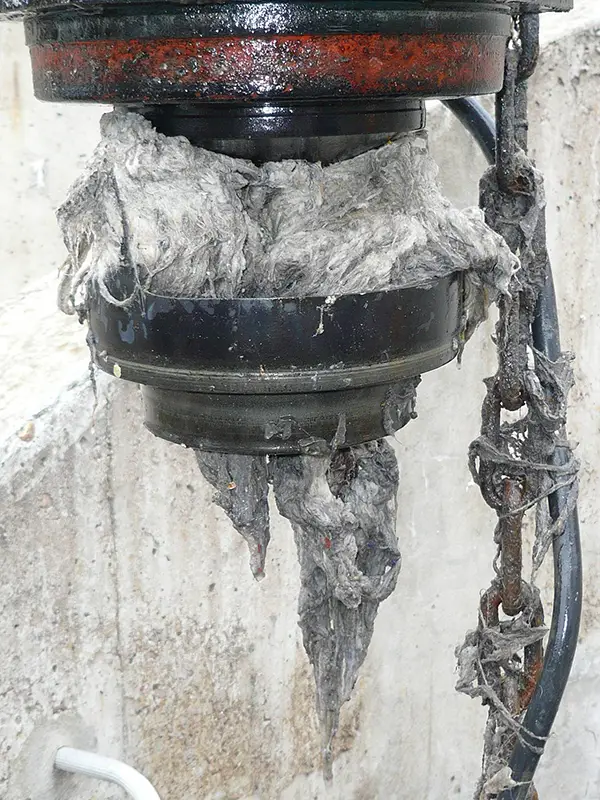
Unlike toilet paper, a wet wipe does not break down in the sewer. Its fibres resist water and bind with grease and other floating debris to form long ropes, known as ragging. Once they reach the station, these ropes wrap around pump impellers and check valves.
Operators know the consequences well:
- overcurrent and motor protection trips;
- premature wear of impellers, seals and valves;
- pumps to lift out and clean, often during on-call hours;
- in the worst case, station overflow and raw sewage discharged to the environment.
The problem is huge. According to the technical director of Veolia Eau France, quoted by AFP, wet wipes account for up to 70% of sewer unblocking call-outs in France (source). And "flushable" or "biodegradable" labels change nothing: the time spent in the sewer is far too short for wipes to break down before they reach the station.
The screening basket: protection that depends on site visits
A screening basket catches large solids upstream of the pumps. It is simple and cheap to buy, but it has three limits:
- It fills up. Once full, it overflows or is bypassed, and the pumps are no longer protected.
- It must be lifted by hand. Winch or davit, dripping soiled waste, exposure to biological hazards and station gases.
- While it is being lifted, there is no protection at all. Sewage keeps flowing straight to the pumps.
As wet wipe volumes grow, baskets need emptying more often. The real cost of a basket is then measured in operator hours, travel and pump repairs, far more than in purchase price.
The automatic Bar Screen: permanent protection
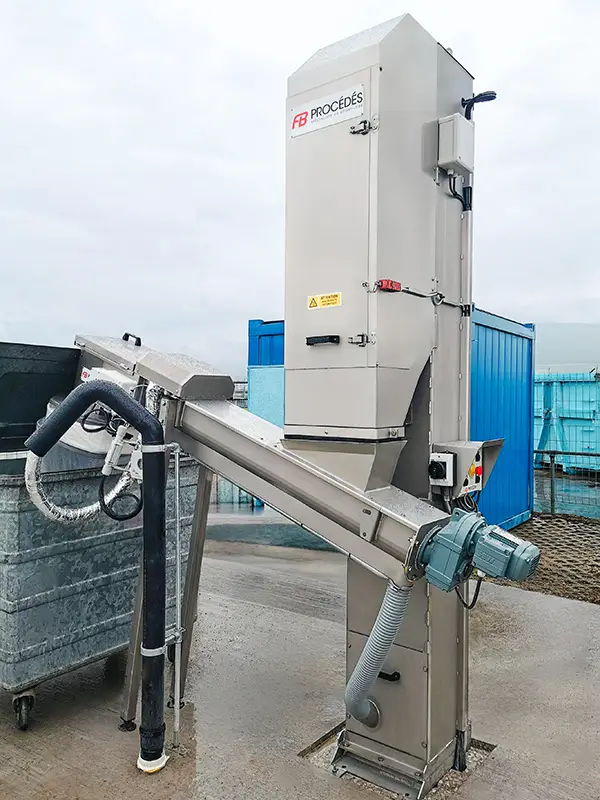
An automatic Bar Screen for pumping stations places a stainless steel bar rack facing the inlet, upstream of the pumps. A grapple rake regularly travels up the screen, collects the screenings and discharges them outside the station: into a skip, a bag or a Screw Compactor.
The cycle is triggered by a timer and by the upstream level measurement, so the screen stays clear even during storm-flow peaks. On FB Procédés Bar Screens, the grapple rake is driven by a strap, which lasts longer than a chain or a cable in an aggressive environment.
The result: ragging never reaches the pumps, and nobody has to lift a basket again.
Manual basket vs automatic Bar Screen
| Criterion | Screening basket | Automatic Bar Screen |
|---|---|---|
| Pump protection | Until the basket is full | Continuous, including peak flows |
| Screenings removal | Basket lifted by hand | Automatic, outside the station |
| Staff exposure | Handling soiled waste above the wet well | No handling; maintenance from ground level |
| During maintenance | Pumps unprotected | Screen stays in place |
| Solids sent to the treatment plant | Everything that passes an overflowing basket | Retained and removed at the station |
| Cost | Low to buy, high to operate | Higher investment, lower operating cost |
How to retrofit an existing pumping station
In most cases, no civil works are needed.
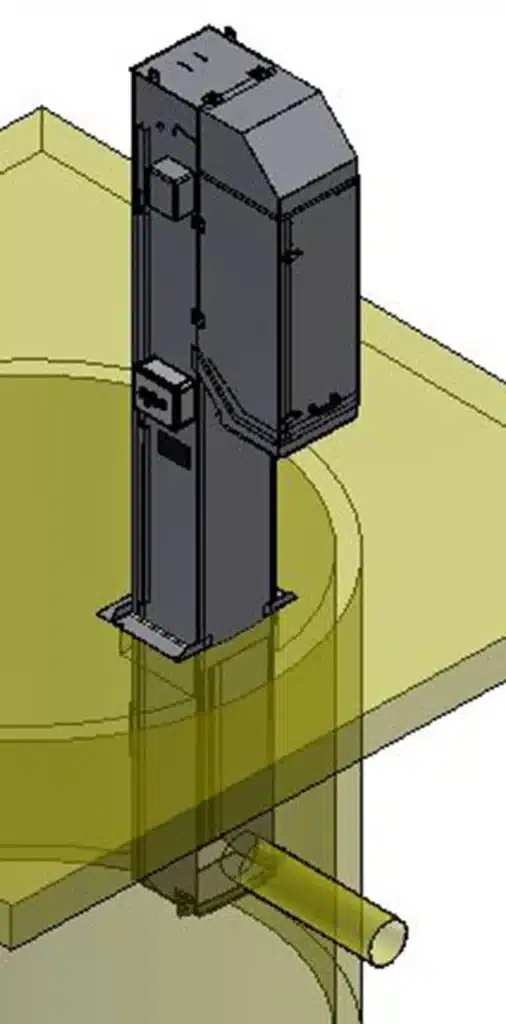
- Concrete station: the Bar Screen is fixed to the inner vertical wall, at the top and on the wall. The lower frame sits in front of the inlet pipe.
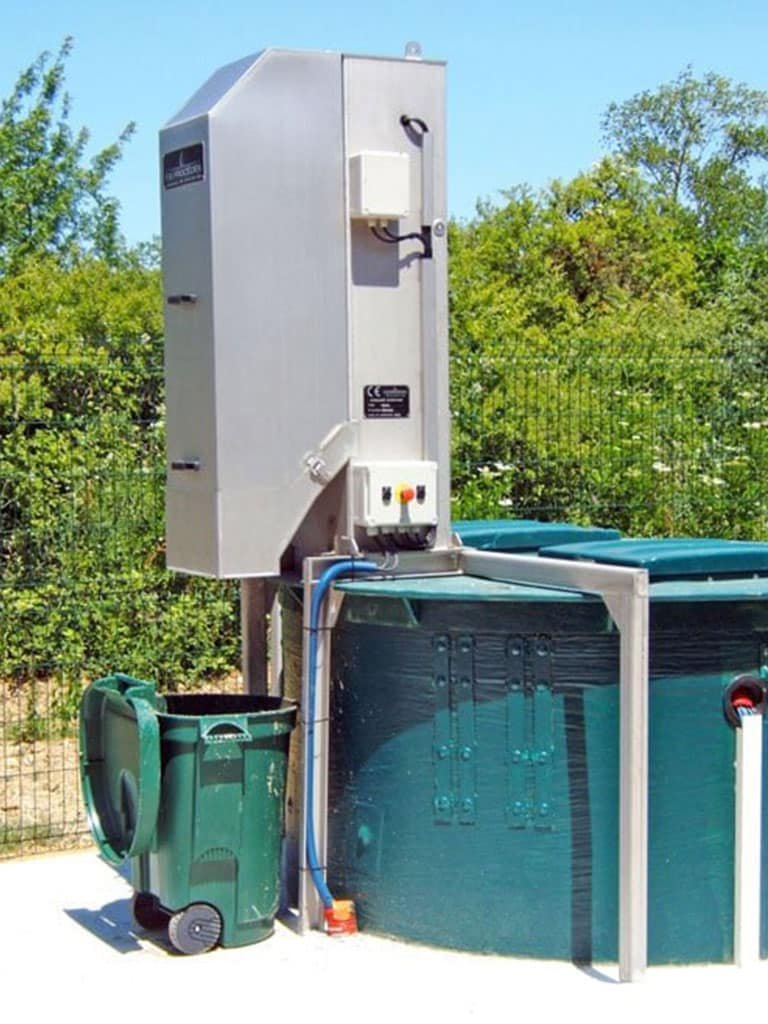
- Polyester station: a stainless steel support frame designed by FB Procédés takes the loads, without stressing the tank.
- Footprint: close to that of a manual basket. The space between the inlet and the screen acts as a buffer for screenings.
- Maintenance: all mechanical parts are accessible from ground level, without entering the station.
Three models cover most needs:
Data needed to size the Bar Screen
- Peak flow, including storm flow on combined sewers.
- Station depth and required discharge height above ground.
- Station diameter or dimensions, and inlet pipe position.
- Station material: concrete or polyester.
- Required bar spacing (see What bar spacing should I choose for a Bar Screen?).
- Screenings handling: skip, bag, Screw Compactor, truck access.
- Existing power supply, control panel and telemetry.
With this information, our design office sends you a dimensioned drawing of the machine suited to your station.
Frequently asked questions
Aren't chopper pumps enough?
They reduce the risk of blockage but do not remove wipes from the system: the cut fibres travel on to the treatment plant, where they can bind together again. A Bar Screen takes the solids out at the station.
Do we need civil works?
Not in most cases. The Bar Screen is fixed to the wall of a concrete station or on a stainless steel frame in a polyester station; its footprint is close to that of a basket.
What maintenance is required?
Mechanical parts are accessible from ground level, without entering the station. FB Procédés offers maintenance contracts with preventive visits.
Are "biodegradable" wipes a problem too?
Yes. They spend far too little time in the sewer to break down before reaching the pumping station.
A pumping station to protect?
Since 1985, FB Procédés has designed and built custom stainless steel automatic Bar Screens in France. Send us your station's details and we will propose the right machine, with a dimensioned drawing.